

How Distracted Driving Laws in New York Impact Personal Injury Claims
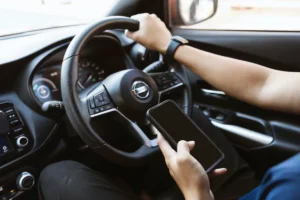 Distracted driving is now the leading cause of serious and fatal motor vehicle accidents in New York. Despite years of public awareness campaigns and increasingly strict traffic laws, drivers continue to divert their attention from the road to their phones, navigation systems, and other in-vehicle distractions. When distraction leads to a crash, injured victims are left dealing with medical treatment, lost income, and long-term physical and emotional consequences.
New York’s distracted driving laws play an important role in personal injury litigation. These statutes shape how fault is evaluated, how negligence is established, and how evidence is presented in civil claims. Understanding how the legal framework works and how it intersects with personal injury law can make a significant difference in the outcome of an injury case. For help with your injury claim after a crash in Orange County or the Mid-Hudson Valley, call Dupée & Monroe, P.C., to speak with a Goshen distracted driving car accident lawyer dedicated to making sure you get the care and compensation you deserve.
The Legal Framework Governing Distracted Driving in New York
New York has adopted some of the most comprehensive distracted driving laws in the country. Under Vehicle and Traffic Law § 1225-d, drivers are prohibited from using portable electronic devices while a vehicle is in motion. This includes holding a cellphone, texting, emailing, browsing the internet, or using social media. The law is broad and is designed to address both manual and visual distractions that take a driver’s attention away from the roadway.
In addition to the handheld device ban, Vehicle and Traffic Law § 1225-c specifically prohibits texting while driving. Texting is defined broadly and includes composing, sending, reading, or receiving text-based communications. Violations of these laws carry fines, points on a driver’s license, and potential license suspension for repeat offenses.
New York also enforces hands-free requirements. Drivers may use hands-free technology, such as Bluetooth systems or voice commands, provided the device is mounted and does not require manual handling. Even so, hands-free use does not excuse inattentive driving. A driver can still be found negligent if hands-free device use contributes to a failure to observe traffic conditions or react appropriately.
Why Distracted Driving Matters in Personal Injury Claims
Traffic laws do more than regulate behavior on the road; they establish standards of care. In personal injury cases, negligence is based on whether a driver failed to act as a reasonably prudent person would under similar circumstances. Distracted driving laws help define what reasonable conduct looks like behind the wheel.
When a driver violates a distracted driving statute, that violation can serve as strong evidence that the driver breached their duty of care. Courts often treat such violations as evidence of negligence, and in some cases, they may amount to negligence per se if the statute was designed to protect against the type of harm that occurred.
This legal connection is especially important in distracted driving cases because distraction is not always visible in the same way as speeding or running a red light. The existence of a statutory violation helps anchor the claim in objective, enforceable standards.
The Role of a Traffic Citation in a Civil Injury Case
When a driver is cited for texting or using a handheld device after a crash, that citation can significantly strengthen a personal injury claim. A traffic ticket creates contemporaneous documentation that law enforcement believed the driver violated the law. While a traffic citation does not automatically establish civil liability, it is often persuasive evidence when negotiating with insurance companies or presenting a case to a jury.
A guilty plea or conviction related to a distracted driving violation may be admissible in a civil case, depending on the circumstances. Even when the citation is resolved without an admission of guilt, the fact that it was issued can still support an argument that the driver was not exercising reasonable care.
Insurance companies take distracted driving citations seriously. A documented violation undermines common defense arguments and can increase the likelihood of a favorable settlement, particularly when the injuries are significant and liability is otherwise contested.
Personal Injury Claims Without a Distracted Driving Citation
Importantly, the absence of a traffic citation does not prevent an injured person from pursuing a distracted driving claim. Police officers do not always witness the distraction, and citations are sometimes not issued due to limited evidence at the scene or competing priorities during emergency response.
Civil liability is determined by a preponderance of the evidence, not by whether a driver was ticketed. An injured person can prove distraction through other forms of evidence, including eyewitness testimony, surveillance or traffic camera footage, cellphone records, vehicle data, and accident reconstruction analysis.
For example, cellphone usage logs may show that a driver was actively sending or receiving messages at the time of the collision. Witnesses may testify that the driver was looking down or holding a phone immediately before impact. In some cases, admissions made by the driver at the scene or afterward can also support a negligence claim.
Challenges in Proving Distracted Driving
Distracted driving cases present unique evidentiary challenges. Drivers rarely admit to using their phones, and insurers often dispute the timing or relevance of electronic activity. Establishing a clear connection between distraction and the accident requires careful investigation and legal strategy.
Medical records, crash dynamics, and vehicle damage patterns must align with the theory that the at-fault driver failed to perceive or respond to hazards. Experienced personal injury attorneys understand how to develop this evidence and counter defense arguments that seek to minimize or deflect responsibility.
The Broader Impact of Distracted Driving Evidence on Damages
Beyond liability, distracted driving evidence can influence the value of a personal injury claim. Jurors and adjusters tend to view distracted driving as particularly blameworthy conduct because it is preventable and well-known to be dangerous. When a crash results from a driver’s conscious decision to use a phone, it often strengthens claims for pain and suffering and other non-economic damages.
In cases involving severe injuries, distraction may also affect settlement posture and trial strategy, especially when combined with additional violations such as speeding or failure to yield.
How Dupée & Monroe, P.C. Can Help After a Distracted Driving Accident in Goshen and Orange County
Distracted driving cases require more than simply showing that a crash occurred. They demand careful analysis of traffic laws, electronic evidence, and liability principles under New York law. At Dupée & Monroe, P.C., we represent accident victims throughout Goshen, Orange County, and the Hudson Valley, and we understand how distracted driving statutes impact personal injury claims.
Our attorneys work to uncover critical evidence, evaluate the role distraction played in the collision, and build strong cases designed to hold negligent drivers accountable. Whether or not a traffic citation was issued, we are prepared to pursue full and fair compensation for our clients.
If you or a loved one has been injured in a distracted driving accident, contact Dupée & Monroe, P.C., for a free consultation. We are here to protect your rights and guide you through every stage of the personal injury process.
