

Rollover and Multi-Impact Collision Claims in New York
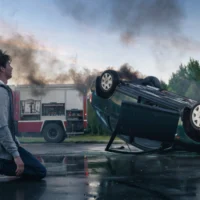 A rollover or multi-impact crash can be far more complicated than an ordinary two-vehicle accident. A collision may begin with one driver’s careless maneuver and then develop into a sequence of impacts involving several vehicles, roadside objects, or even multiple rollovers. By the time the vehicles come to rest, determining what caused the injuries and which driver is responsible can require a detailed reconstruction of the entire event.
These cases can be particularly challenging when several drivers, insurers, and potential sources of liability are involved. One driver may have caused the initial collision, while another driver’s actions may have contributed to a later impact. A vehicle defect, roadway condition, or failure to use appropriate safety equipment may also become part of the investigation.
At Dupée & Monroe, P.C., our Goshen car accident attorneys represent accident and injury victims throughout Orange County and the Hudson Valley. Understanding how rollover and multi-impact collision claims are investigated can help injured people recognize the importance of preserving evidence and identifying every potentially responsible party.
How Rollover Accidents Happen
A rollover occurs when a vehicle tips onto its side or roof during a crash or loss-of-control event. The mechanics can vary considerably depending on the vehicle, speed, roadway, point of impact, and surrounding conditions.
Some rollovers begin when a vehicle is struck from the side or rear. Others occur when a driver swerves suddenly to avoid another vehicle, leaves the roadway, strikes a curb or object, or loses control on wet, icy, or uneven pavement. A vehicle can also roll after striking a ditch, embankment, guardrail, or other roadside feature.
The fact that a vehicle rolled over does not, by itself, establish who was at fault. Investigators must determine what caused the vehicle to lose stability and whether another person’s conduct set the sequence of events in motion.
For example, a driver who suddenly changes lanes without checking for traffic may force another motorist to swerve. If the second vehicle leaves the roadway and rolls over, the driver who initiated the dangerous maneuver may potentially be responsible even though their vehicle never physically struck the injured person’s vehicle.
What Makes a Multi-Impact Collision Different?
A multi-impact collision can involve several distinct points of impact occurring within seconds. A driver may be struck by one vehicle, pushed into another, and then collide with a fixed object. Alternatively, a chain reaction may develop when one vehicle rear-ends another, causing each vehicle to strike the vehicle in front of it.
The sequence matters because the parties involved may dispute which impact caused particular injuries.
A defendant may argue, for example, that another driver caused the injury-producing impact. Another insurer may contend that the victim’s injuries resulted from a later collision rather than the defendant’s initial negligence. When several vehicles are involved, each driver may attempt to shift responsibility to someone else.
Establishing the sequence of events is therefore one of the most important parts of a multi-impact accident investigation.
How Liability Is Established in a Rollover or Pileup
New York personal injury claims arising from motor vehicle accidents generally depend on establishing negligence and causation. The injured person must establish that another party failed to exercise reasonable care and that the conduct was a cause of the accident and resulting injuries.
Evidence may include police reports, photographs, vehicle damage, witness statements, traffic-camera footage, vehicle data, cellphone records, roadway evidence, and testimony from the drivers involved.
In some cases, the basic facts may establish negligence relatively clearly. For example, New York courts have recognized that a rear-end collision with a stopped or stopping vehicle can establish a prima facie case of negligence against the rear driver, requiring that driver to provide a non-negligent explanation or face liability.
Multi-impact crashes, however, often require more extensive analysis because the initial collision may trigger a chain of subsequent events.
The Importance of Accident Reconstruction
Accident reconstruction can be particularly valuable when the sequence of a crash is disputed. A reconstruction expert can examine vehicle damage, skid marks, roadway evidence, photographs, electronic data, and other information to develop an opinion about how the collision occurred.
The objective is not simply to determine which vehicles touched one another. The investigation may need to establish the direction and speed of each vehicle, the timing of each impact, the location of the vehicles before and after the collision, and how the forces involved affected the occupants.
In a rollover case, an expert may also analyze the point at which the vehicle became unstable and the circumstances that caused it to leave the roadway or overturn.
This evidence can be especially important when the physical scene changes quickly or when the vehicles are repaired, moved, or destroyed after the accident.
Establishing Causation for Injuries
Proving who caused the crash is only part of a personal injury claim. The injured person must also establish a connection between the collision and the injuries being claimed.
This can become complicated when several impacts occur. A defendant may acknowledge responsibility for an initial collision but argue that a particular injury resulted from a later impact involving someone else.
The distinction can be important in cases involving traumatic brain injuries, spinal injuries, fractures, internal injuries, and other serious conditions. A person may sustain multiple injuries from different forces during the same crash, making a complete medical evaluation essential.
Multiple Drivers May Share Responsibility
A multi-vehicle accident does not necessarily result in one driver being 100% responsible. More than one person may have contributed to the crash. In such cases, every responsible party can be held liable either jointly or individually for the full amount of damages.
For example, suppose Driver A makes an unsafe lane change, causing Driver B to brake suddenly. Driver C, who was following too closely, strikes Driver B. If Driver B suffers injuries during the resulting sequence of collisions, the evidence may support claims against both Driver A and Driver C, depending on the circumstances.
Determining each driver’s contribution requires looking at the entire sequence rather than focusing only on the final impact.
New York’s Serious Injury Threshold
New York’s no-fault insurance system governs compensation for motor vehicle personal injury claims. Under Insurance Law § 5104, a person cannot recover non-economic damages such as pain and suffering from another covered person unless the injured person sustained a “serious injury” as defined by Insurance Law § 5102(d).
The statutory definition of serious injury includes several categories, including death; dismemberment; significant disfigurement; fracture; permanent loss of use of a body organ, member, function, or system; permanent consequential limitation of use of a body organ or member; and significant limitation of use of a body function or system.
Rollover and multi-impact collisions can produce serious injuries that potentially satisfy this threshold, but the specific diagnosis and medical evidence matter. A significant crash does not automatically establish that the statutory threshold has been met. The injury itself must fall within one of the categories recognized by New York law.
Where multiple drivers are involved, identifying all applicable liability and uninsured/underinsured motorist coverage can become an important part of protecting an injured person’s financial recovery.
Why Evidence Should Be Preserved Immediately
Evidence in a serious collision can disappear or become difficult to obtain surprisingly quickly. Vehicles may be repaired or totaled, skid marks may disappear, surveillance footage may be overwritten, and witnesses’ memories can become less precise.
Anyone involved in a rollover or multi-impact crash should, if it is safe to do so, preserve photographs and videos of the vehicles, roadway, debris, skid marks, traffic signs, and surrounding conditions. Contact information for witnesses should also be obtained whenever possible.
The police accident report can provide an important starting point, but it may not contain everything needed to establish liability. A thorough investigation may require obtaining additional records, photographs, surveillance footage, vehicle information, and expert analysis.
Frequently Asked Questions About Rollover and Multi-Impact Crashes
Who is at fault in a multi-vehicle accident in New York?
Fault depends on the specific circumstances. One driver may be responsible, or multiple drivers may share responsibility. Evidence concerning each vehicle’s actions before and during the collision is used to determine comparative fault.
How is fault determined in a rollover accident?
Investigators may examine vehicle damage, roadway evidence, photographs, witness accounts, electronic data, and other evidence to determine what caused the vehicle to lose control and roll over.
Can I sue multiple drivers after a chain-reaction accident?
Potentially. If the conduct of multiple drivers contributed to the accident or your injuries, claims may be available against more than one responsible party.
Do I need to prove a serious injury after a rollover accident in New York?
If you are seeking non-economic damages such as pain and suffering from another covered person, New York’s serious injury threshold applies. The statutory definition includes several categories of qualifying injuries.
What evidence is important after a multi-car accident?
Police reports, photographs, vehicle damage, witness information, surveillance footage, medical records, vehicle data, and accident reconstruction evidence can all help establish how the collision occurred and who was responsible.
Contact Dupée & Monroe, P.C. in Goshen for a Free Consultation
Rollover and multi-impact collisions can raise difficult questions about the sequence of events, shared responsibility, insurance coverage, and the connection between each impact and an injured person’s medical condition. At Dupée & Monroe, P.C., we understand the importance of conducting a thorough investigation and identifying all potentially responsible parties.
If you or a loved one has been injured in a rollover or multi-vehicle collision in Goshen, Orange County, or the Hudson Valley, contact Dupée & Monroe, P.C. for a free consultation. Our attorneys can evaluate the circumstances of your accident, explain your legal options, and pursue the compensation you deserve.
